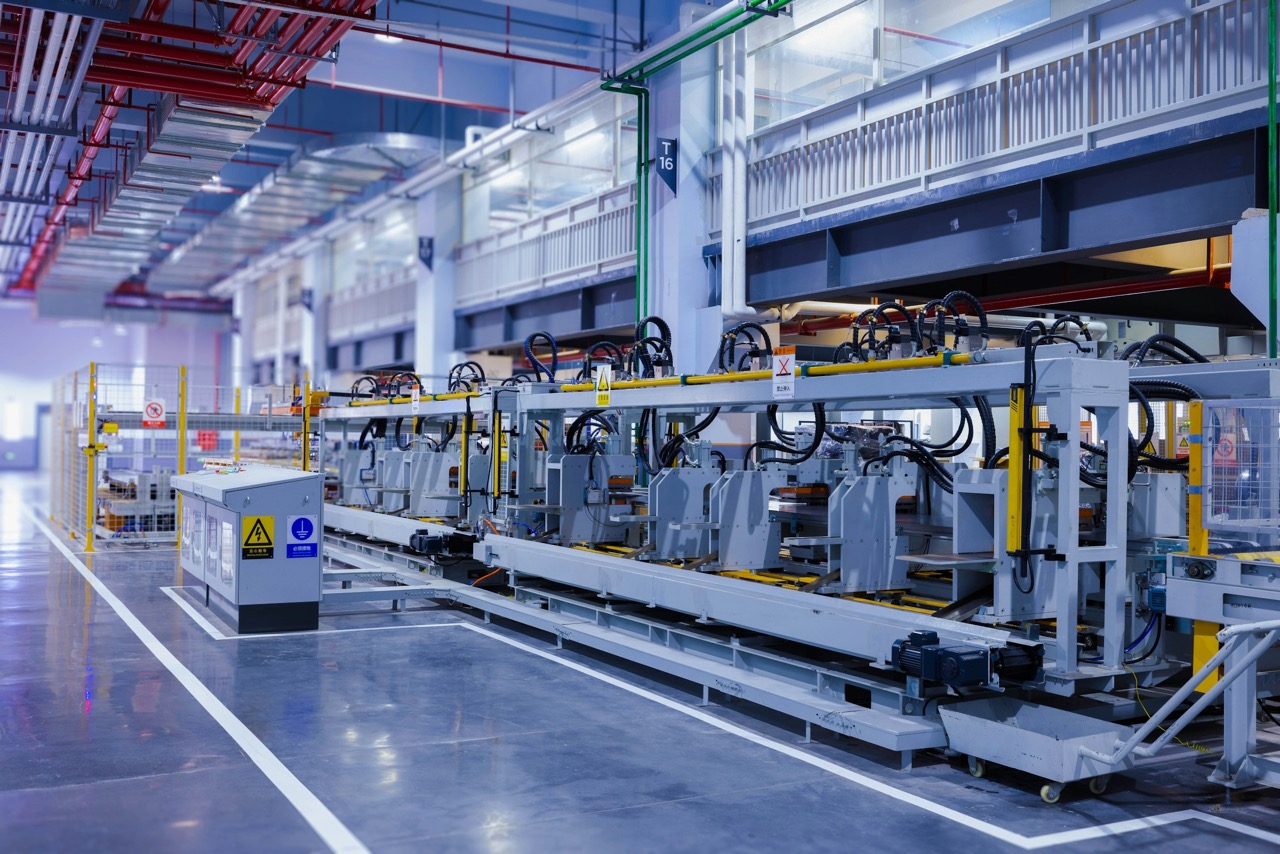
Manufacturing Plants

Rooted helps plant operations improve efficiency, strengthen workforce coordination, and sustain long-term adaptability.


Manufacturing plants run on informal coordination systems that took years to build and can unravel in a single retirement season — and most technology deployments don’t account for what they’re disrupting.

U.S. manufacturing employment sits around 12.7 million jobs — well below early-2000s levels — and demographic pressure is accelerating the departure of the workers who hold the most institutional knowledge.[1] Skilled worker turnover costs manufacturers between $10,000 and $50,000 per replacement, and attracting and retaining qualified workers ranks as the primary business challenge for the majority of manufacturers — ahead of pricing, competition, and technology investment.[2] Plants deploying ERP systems, MES platforms, and automation technology are finding that adoption on the production floor lags significantly behind go-live dates: the technology works, but the workflows weren’t redesigned and the frontline workers weren’t genuinely brought along. The gap between system launch and actual productivity improvement is almost always organizational.[2]


Biggest Challenges We See
in the Manufacturing Plants Space


Institutional knowledge walking out before it can be transferred

The shift supervisor who keeps a critical line running, the maintenance tech whose methods nobody else fully understands, the quality coordinator who catches problems before they become defects — these individuals hold process knowledge that doesn’t appear in any system, wasn’t captured during implementation, and can’t be recovered after they leave. Formal documentation captures procedures; it misses the judgment. Mentoring programs help when time and attention allow; they don’t work when experienced workers are already stretched. And the plant environment offers few natural structures for knowledge transfer — shifts change, lines run, and the pace rarely creates space for deliberate learning. When the knowledge walks out, the organizational cost shows up as inconsistent quality, slower problem resolution, and higher error rates on the lines those individuals used to manage.[1][2]

Technology adoption that stalls at go-live because the floor wasn’t ready

ERP systems, MES platforms, and automation deployments consistently underperform in the first 12–18 months after launch on the production floor — not because the technology fails, but because the workflows that workers rely on weren’t redesigned before go-live, and the change program treated frontline operators as recipients of training rather than participants in redesign. Floor workers develop informal workarounds faster than adoption metrics can track them. Supervisors revert to prior methods under production pressure. The gap between how the system was designed to be used and how it’s actually being used widens. By the time it’s visible in the data, the window for correcting course without significant rework has usually passed.[2]

How Rooted Helps Leaders in the Industry

ONA and OCM address the knowledge retention and technology adoption challenges that plant operations face at the floor level. ONA maps the informal networks that keep production running — identifying who actually solves problems, who holds process knowledge for critical lines, and where coordination between shifts, departments, and functions breaks down before it causes a defect or a delay. That map is the foundation for both knowledge transfer planning and technology deployment sequencing. OCM then designs adoption programs built for production environments: phased rollouts that don’t stop the line, change approaches that work through the informal leaders floor workers actually trust, and post-launch monitoring that catches reversion before it becomes permanent.

Organizational Network Analysis (ONA)

Manufacturing Plants

Manufacturing operations depend on informal networks that production veterans have built over years. ONA maps these networks — floor leads, quality coordinators, shift supervisors who hold institutional knowledge — before nearshoring transitions, technology rollouts, or workforce reductions break them.
Production floor informal network mapping
Quality-operations coordination gap identification
Critical knowledge holder assessment
Nearshoring and technology transition relationship analysis

Business Process Engineering (BPE)

Manufacturing Plants

Manufacturing processes accumulate inefficiency as equipment, suppliers, and workforces change without corresponding process updates. BPE maps actual production workflows, identifies where handoffs create delays, and redesigns operations around how production actually runs today.
Production workflow analysis and redesign
Quality control process improvement
Supplier onboarding and qualification standardization
Technology integration process development

Organizational Change Management (OCM)

Manufacturing Plants

Technology adoption on the production floor fails when it ignores floor-level dynamics. OCM works through the informal leaders that production teams actually listen to — not around them — designing change approaches that respect decades of operational expertise.
Technology adoption strategy for production environments
Nearshoring transition change management
Workforce restructuring communication and engagement
Operator training and capability development

Organizational Development & Effectiveness (OD&E)

Manufacturing Plants

Manufacturing workforce structures require design that reflects operational reality: shift structures, skill tiering, apprenticeship models, cross-training programs. OD&E builds organizational frameworks that retain institutional knowledge, develop frontline capability, and create resilience through headcount and supplier changes.
Production workforce structure design
Skill pathway and apprenticeship development
Cross-training and knowledge transfer systems
Organizational design for nearshoring transitions and growth


How We’ve Helped Manufacturing Plants Organizations with their Operations

Sector-Based Scenarios. Tangible Outcomes.

A food manufacturer operating four production facilities had significant performance variation across sites despite identical equipment, procedures, and quality systems. One facility consistently outperformed the others on quality, efficiency, and safety metrics — but no one could explain why. We ran ONA across all four facilities and found the answer: the high-performing site had strong informal networks connecting across shifts and functions. Experienced workers mentored newer ones. Shift supervisors communicated extensively during handoffs. Quality and operations collaborated on problem-solving rather than operating in separate lanes. Lower-performing facilities had weaker networks, less cross-shift communication, and more siloed functions. Rather than trying to replicate informal networks that had evolved over years, we identified the specific practices that enabled them — structured shift handoffs, cross-functional problem-solving sessions, formal mentoring assignments — and implemented adapted versions at each underperforming site. Within nine months, the lowest-performing facility improved quality metrics by 35% and the second-lowest improved efficiency by 28%.


Markets shift (fast).
Your floor can’t afford to.

At Rooted, we help financial institutions adapt to new requirements without losing client trust. As compliance evolves and competition intensifies, we guide teams through transformation using strategies built for stability. We understand the stakes, then we help you protect what matters.

  1. U.S. Bureau of Labor Statistics. “Manufacturing: NAICS 31–33.” https://www.bls.gov/iag/tgs/iag31-33.htm
  2. Deloitte. “A Shrinking Workforce May Thwart US Manufacturing Ambitions.” https://www.deloitte.com/us/en/insights/topics/economy/spotlight/us-manufacturing-labor-impact.html